International Analog Forestry Network - History
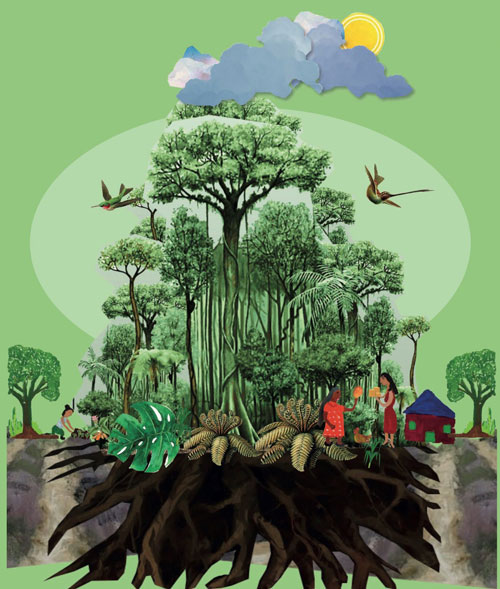
The International Analog Forestry Network was created in 1995 to develop replicable models of sustainable resource management based on traditional methods of intensive tropical agriculture known as 'Forest Gardens'. The technology has been refined during the past fifteen years by the Neo-Synthesis Research Centre in the Sri Lankan highlands. The application of analog forestry is a careful balance between recreating a forest system that is analogous in structure and function to the original ecosystem and serving the economic interests of the participating farmers through the use of crop-producing species. Analog forestry is a science that allows farmers to add value to their existing agricultural system while benefiting from the effects of a healthier, more stable ecosystem.
Representatives of the five member organizations of the International Network first gathered for a conference in Sri Lanka in April 1995 to formalize the network and to examine and discuss the various aspects of analog forestry in application. Each member organization of the network was chosen for their work in practical restoration of degraded forest land and involvement of the local communities in their respective regions. In November 1996, practitioners from each organization came together again to be trained in applying practical landscape design training into their current forestry programs. The participants of the workshop acquired many practical skills that they have been able to use to transform their activities.
In November of l996 the members of the network and other representatives of organizations invited, attended the design-training workshop in Sri Lanka, funded with support from the ESDP. In this workshop, participants were trained in the use of techniques applied in AF and discussed further the network goals and future activities.
In June of 1999 a training workshop on AF and a international meeting was organized in Peru – Madre de Dios, hosted by COICAP and supported by FBC. During this workshop, promoters and technicians working with communities were trained on the most relevant techniques, plots of AF were installed. At the end of the gathering, the members of the IAFN, exchange seeds and signed the seeds exchange contract. The members of the network also committed efforts to develop a strategy to widener the network impact and activities.
Since that time, the founder organization’s members have been building programs of analog forestry, which includes working in the field, with rural communities establishing arboretums and a nurseries to install Forest Gardens or Analog Forestry plots around the world.
The practical value of the Analog Forestry system, has been demonstrated with over 12 years of research that is being translated into community projects. Today there are over 35 villages in Sri Lanka with over 250 individual farmers involved in extension projects and two farmer groups in Victoria, Australia applying the techniques to enhance the Federal Landcare programme. In Ecuador and Costa Rica Analog Forestry activities are being spread to many farmer organizations involved with the extension work of Arbofilia and Rainforest Rescue. The commercial value of analog forestry is just being realized by the institution of a certification system that adds value to the products of this process. Certified products in exportable quantity and quality are now just coming into the market. The value of Analog Forestry to biodiversity conservation has been recognized by the UN sponsored, Inter-Government meetings of scientists held in Mexico in 1994.
ANALOG FORESTRY NETWORK
The International Analog Forest Network, is a coalition of organizations working to achieve the goals of ecological restoration, through direct application of the system in their own localities. The individuals and organization members are also committed with training, research, and share of information about the techniques applied and the results of their activities related to AF,
With 6 years in existence and many of the goals of AF achieved by the practitioner members, in its own localities and a range of activities achieved by the member organizations, including: nurseries, seed exchanges, field training and over 500 hectares of land currently managed with analog forestry landscape restoration practices. Some products from Sri Lanka are entering the international marketplace under the organic label, the other country programs are already able to have products on the local markets.
The network has also maintained a tri-monthly publication in Spanish and English, with relevant information for the application of AF and news of the progress of the members.
The Analog Forest Network was founded by Falls Brook Centre, the Neo-Synthesis Research Centre (NSRC - Sri Lanka), Fundación RainForest Rescue (FURARE - Ecuador). Arbofilia (Costa Rica) and COICAP (Peru) and it has the potential to extend its influence, as many organizations from different countries have showed interest in the development of AF.
The IAFN needs time to build its long-term strategy, to support the process of Forest Garden Products certification and to seek avenues to include more interested groups and to input into policy level decisions regarding restoration.
|